

Big Small Pot Energy for Elite Brown Turkey Fig Success
The Legend of the Brown Turkey: Why Your Backyard Needs This Workhorse
If the world of fig collecting were a high school cafeteria, the Brown Turkey would be the kid wearing a denim jacket who can fix a lawnmower, ace a math test, and still find time to be nice to everyone. It isn’t the flashy “new kid” from a remote Mediterranean island with a name that sounds like a designer fragrance. It’s the reliable, overachieving classic that has been feeding families since your great-grandfather was complaining about the price of nickel candy.
The Brown Turkey fig—specifically the California or Texas strains most of us encounter—is the ultimate “gateway fig.” It is hardy, productive, and possesses a survival instinct that would put a desert cactus to shame. But here is the secret most people miss: while this tree can survive neglect, it absolutely thrives when you treat it with a little bit of tactical intention. We’re talking about “Big Small Pot Energy.” Whether you have forty acres of rolling hills or a four-foot balcony, I’m going to show you how to take a simple cutting and turn it into a fruit-bearing machine that makes your neighbors wonder what kind of horticultural sorcery you’re practicing.
Propagating Brown Turkey Cuttings: The Art of the Fresh Start
Propagation is essentially plant cloning, which sounds way more sci-fi than it actually is. When you take a cutting from a Brown Turkey, you aren’t just growing a new tree; you’re continuing the lineage of a plant that has likely survived dozens of winters and heatwaves. Brown Turkeys are famous for their vigor, making them the perfect candidate for your first (or fiftieth) propagation project.
When you hold a dormant cutting in your hand, you’re looking at a stick of potential. To unlock that potential, you need to manage the three pillars of propagation: hydration, temperature, and patience. Brown Turkey cuttings are remarkably forgiving, but they aren’t indestructible. If you leave them in a puddle, they’ll rot. If you let them bone-dry, they’ll turn into expensive kindling. We’re looking for that “Goldilocks” zone where the environment says, “Hey, it’s safe to come out now.”
The “Pre-Game” Preparation
Before you even think about dirt, look at your cutting. It should be about 6 to 10 inches long, roughly the thickness of a Sharpie, and have at least three or four nodes (those little bumps where leaves used to be). I like to give the bottom of my cuttings a fresh snip right before planting. Use sharp, clean pruners—dull blades crush the tissue, and crushed tissue is basically an open invitation for bacteria to throw a party at your fig’s expense.
I also recommend a “scuff and shine” technique. Lightly scrape a half-inch sliver of the outer bark off the bottom of the cutting to reveal the bright green cambium layer underneath. This is where the magic happens. By exposing this layer, you’re telling the plant, “This is the spot where roots should go.” You can use a rooting hormone if you want to feel fancy, but honestly, Brown Turkeys have so much natural ambition they usually don’t need the extra pep talk.
The Direct-Potting Method: Setting the Stage for Success
Many growers swear by the “figgie bag” method or rooting in water, but I’m a fan of direct-potting in a lightweight, well-draining medium. Why? Because every time you move a tiny, fragile new root, you risk breaking it. Starting them in their “first home” reduces transplant shock and lets the plant focus on building a sturdy foundation.
Your potting mix should be fluffy. If it feels like the dirt in your backyard that turns into bricks in the summer, keep walking. I prefer a mix of coco coir or peat moss with a healthy dose of perlite. Think 60% fluff, 40% drainage. This ensures the roots have plenty of oxygen. Remember: fig roots enjoy a drink, but they do not need swimming lessons. If the soil is soggy, the cutting will fail before it even starts.
Step-by-Step Direct Potting
- Choose your vessel: A tall, clear plastic cup with holes poked in the bottom is a pro move. Why clear? Because there is no hit of dopamine quite like seeing those first white roots pressing against the plastic. It’s like a sonogram for plant parents.
- Insert the cutting: Bury at least two nodes deep into the moist (not soaking) mix. The nodes are where the roots will primarily emerge.
- The Humidity Tent: Place a large zip-top bag or a clear plastic bin over your pots. We want to trap humidity because the cutting has no roots to drink with yet. It has to absorb moisture through its skin like a very wooden amphibian.
- Heat is your friend: If you have a seedling heat mat, use it. Setting the temperature to about 70-75°F (21-24°C) encourages root growth before leaf growth. We want a solid basement before we start building the attic.
Understanding the Brown Turkey’s Personality
Not all figs are created equal. The Brown Turkey is known for its “breba” crop and its main crop. The breba crop arrives in early summer on last year’s wood, while the main crop shows up later on the new growth. This makes the Brown Turkey a double-threat. It’s the plant that keeps on giving, provided you don’t prune away all your opportunities.
This variety is also a “chameleon.” A Brown Turkey grown in the humid Southeast might look and taste slightly different than one grown in the arid California valley. In cooler climates, the skin might stay a bit more mahogany-green; in blistering sun, it turns a deep, dusty purple-brown. The flavor is classic “figgy”—mildly sweet, jammy, and rich, without being cloying. It’s the perfect all-purpose fruit for eating fresh, drying, or turning into a preserve that will make you the star of the next family brunch.
Big Small Pot Energy: Growing in Containers
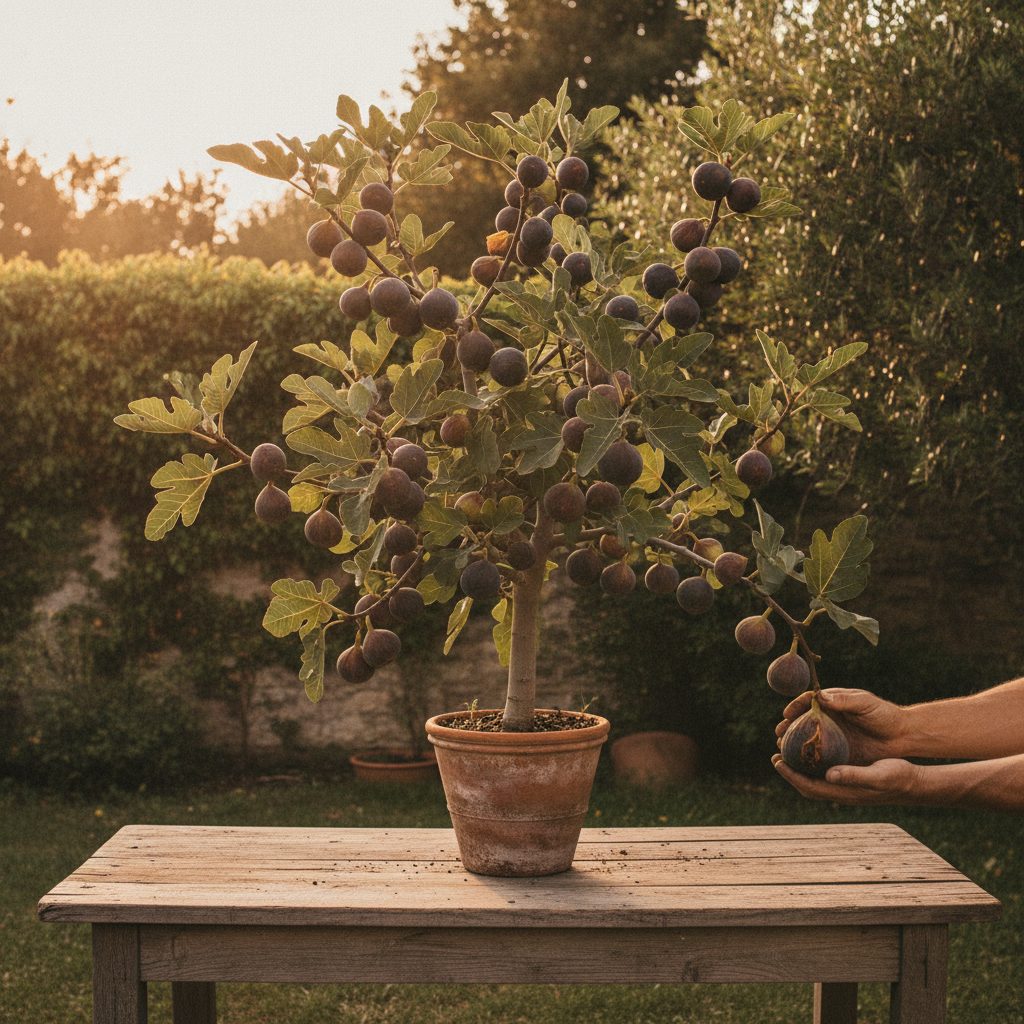
Here is where the “Big Small Pot Energy” comes in. Brown Turkeys are vigorous growers. If you put one in the ground in a favorable climate, it will try to colonize your neighbor’s yard within three seasons. However, they are also incredibly well-suited for container life. In fact, many growers argue that a slightly root-bound fig tree actually produces fruit more reliably because the plant realizes it can’t just keep growing leaves forever and decides it’s time to reproduce.
When you grow in a pot, you are the god of that plant’s universe. You control the water, the nutrients, and the location. If a late frost threatens your crop, you can just wheel that beauty into the garage. If the summer sun is turning into a laser beam, you can move it into the afternoon shade. It’s tactical gardening at its finest.
The Potting Progression
Don’t jump from a solo cup to a 20-gallon whiskey barrel. Plants are like toddlers; they get overwhelmed in spaces that are too big. Start in a 1-gallon pot, move to a 5-gallon the following year, and eventually settle into a 10 or 15-gallon container. This gradual “up-potting” ensures the roots occupy the space efficiently and the soil doesn’t stay too wet for too long.
Watering and Feeding: The “Tough Love” Approach
Brown Turkeys are resilient, but they aren’t miracle workers. During the growing season, they are thirsty. If the leaves start to droop like a Victorian poet in a fainting spell, they need water. However, the quickest way to kill a fig is “Death by Kindness”—overwatering until the roots rot. Always stick your finger an inch into the soil. If it feels dry, water. If it feels damp, go inside and have a snack instead.
When it comes to fertilizer, less is often more. A balanced, slow-release fertilizer in early spring is usually enough to get the engine running. If you over-fertilize with high nitrogen, you’ll get a beautiful, lush green bush with zero figs. You’re essentially telling the tree, “Keep building leaves, we’re not worried about the fruit.” We want the tree to be just a little bit stressed—not “mid-life crisis” stressed, just “I should probably make some seeds soon” stressed.
Common Mistakes and How to Avoid the “Stick of Sadness”
Even the best of us have turned a promising cutting into a moldy stick of sadness. It’s part of the process. Think of it as horticultural tuition; some semesters are just more expensive than others. Here are the most common pitfalls I see with Brown Turkey cuttings:
- The “Lid Lifter” Mistake: You see a tiny green bud and you get excited. You take the humidity dome off immediately. The dry air hits those new leaves, they shrivel, and the plant dies. Keep the humidity high until you see actual roots, not just leaves. Leaves can be a lie; roots are the truth.
- The Deep Freeze: Brown Turkeys are hardy, but a young cutting is tender. Don’t put your babies outside until the danger of frost has passed. One night at 28°F will turn your hard work into mush.
- The “Love Puddle”: Using a pot without drainage holes. I don’t care how pretty the ceramic pot is; if it doesn’t have holes, it’s a coffin. Use a plastic nursery pot inside the pretty one if you must.
- Patience Deficiency: Some cuttings root in two weeks. Some take two months. If the stick is still green when you lightly scratch it, it’s still alive. Don’t dig it up to “check on it.” Imagine if someone dug you up every three days to see if you were growing—you’d be annoyed too.
The Brown Turkey Reward: Harvesting Success
You’ll know your Brown Turkey is ready when the fruit “droops.” A ripening fig will hang heavy on its neck, often developing little cracks in the skin and a drop of nectar (the “eye”) at the bottom. This is the moment of peak sugar. If you pick it too early, it will be milky and bland. Patience is a virtue, and in the case of figs, it’s also delicious.
Once you’ve successfully rooted your first cutting and harvested your first fruit, you’ll understand why we’re all so obsessed. There is something deeply satisfying about eating fruit from a tree you started from a six-inch stick. It’s a connection to the land that you just can’t get at the grocery store—mostly because grocery store figs usually taste like wet cardboard anyway.
Final Thoughts: Just One More Tree
The Brown Turkey is the backbone of the fig world for a reason. It is the survivor, the producer, and the friend of the beginner. By focusing on healthy roots, proper drainage, and a little bit of “Big Small Pot Energy,” you can grow an elite specimen that will provide fruit for years to come. Don’t be afraid to make mistakes. Every dead cutting is just a lesson in what not to do next time, and every successful one is a reason to buy just one more pot.
If you’re ready to start your journey or looking to add a truly vigorous strain to your collection, we’ve got the goods to get you growing. There’s a whole world of flavor out there, and it all starts with one healthy cutting and the confidence to give it a go. Let’s get those pruners sharp and those pots ready. Your future self—the one eating sun-warmed figs in the backyard—will thank you.