

Why Brown Turkey Fig Cuttings Are the Unkillable Kings of Your Yard
The Resilience of the Brown Turkey
Listen, I’ve seen some things in my time as a fig obsessive. I’ve seen rare, temperamental varieties from the hills of Italy curl up and die because I looked at them with the wrong tone of voice. I’ve seen cuttings that cost more than my first car decide that life simply wasn’t for them after a slightly breezy Tuesday. But then, there is the Brown Turkey. If the fig world had a survivalist who lived in a bunker and could sprout roots in a bucket of gravel and spite, it would be the Brown Turkey.
You want to get into the fig game, but you’re afraid of killing things? You’ve come to the right place. We are going to talk about why Brown Turkey fig cuttings are the absolute gold standard for beginners, homesteaders, and anyone who wants a tree that actually wants to live as much as you want it to. We’re going to cover how to root them, why they’re so hardy, and how to manage them so they don’t eventually eat your garage.
What Exactly Is a Brown Turkey Fig?
Before we stick sticks in dirt, let’s clear the air. The “Brown Turkey” is a bit of a broad term in the nursery trade. Depending on where you live, you might hear it called the English Brown Turkey, the Texas Everbearing, or even the California Brown Turkey. While there are subtle differences between these strains, they all share a common DNA of being incredibly productive and remarkably difficult to kill.
The fruit itself is classic: rusty bronze to deep copper skin with a strawberry-pink interior. It’s sweet, it’s reliable, and it has that rich, jammy flavor that makes you realize why people have been fighting over these trees since the Bronze Age. But the real magic isn’t in the flavor—it’s in the genetics. This variety has been bred and selected for centuries to handle fluctuations in temperature, varying soil qualities, and the occasional neglectful gardener who forgets that plants need water to, you know, exist.
Why Brown Turkey Cuttings are Beginner Magic
If you are new to propagation—which is just a fancy horticultural word for “making more plants out of pieces of other plants”—you need a win. You don’t want to start with a variety that requires a laboratory-grade humidity tent and a sacrificial offering. You want something that has a high “will to live” coefficient.
Brown Turkey cuttings are legendary for their rooting vigor. They produce auxins (the hormones responsible for root growth) like they’re being paid by the strand. While some picky varieties might sit in a pot for three months contemplating their existence, a healthy Brown Turkey cutting often decides it’s a tree within two weeks. This speed is your best friend because the faster a cutting roots, the less time it has to sit there and rot. It’s a race against the fungi, and the Brown Turkey is wearing track spikes.
Sourcing Your Cuttings: Quality Over Quantity
I know the temptation. You see a massive, overgrown Brown Turkey in your neighbor’s yard and you want to go at it like a lumberjack. Slow down. The quality of your tree starts with the quality of your cutting. You aren’t just looking for a stick; you’re looking for a blueprint for a future orchard.
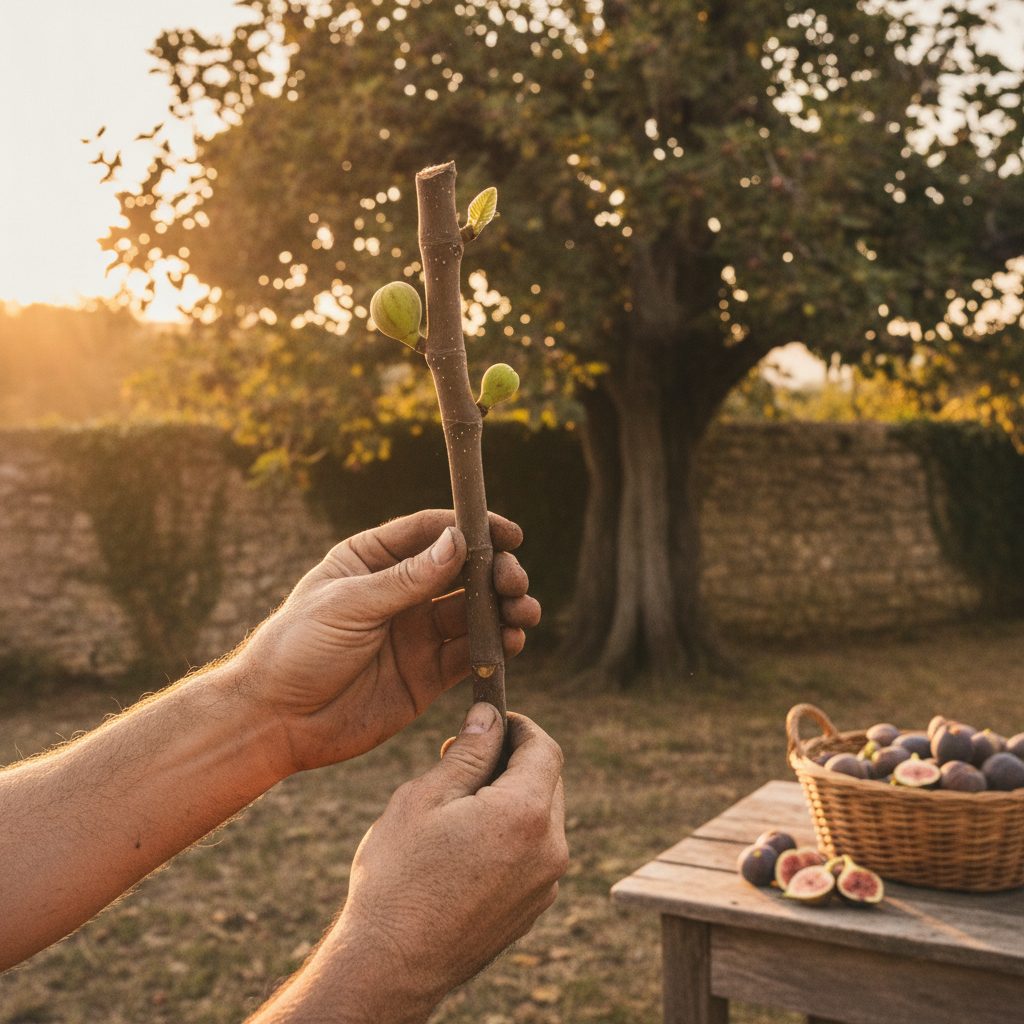
Ideally, you want “hardwood” cuttings. These are branches that grew during the previous season and have gone dormant. They should be roughly the thickness of a Sharpie marker—about half an inch to three-quarters of an inch in diameter. If they’re as thin as a toothpick, they’ll dry out before they can root. If they’re as thick as your arm, they’re awkward to handle and might struggle to push out new growth. Aim for that “Goldilocks” middle ground.
Make sure your cuttings have at least three to four “nodes.” Nodes are those little bumps where leaves used to be. This is where the magic happens—roots come out of the bottom nodes, and leaves come out of the top ones. If you have a stick with no nodes, you just have a very short, very disappointing walking stick.
The Step-by-Step Guide to Rooting Success
I’ve tried every method under the sun. I’ve used the “baggy method,” the “cup of water on the windowsill” method, and the “stick it in the ground and pray” method. For Brown Turkeys, because they are so hardy, you have a lot of leeway, but here is my tried-and-true process for maximum success.
- Sanitize Your Tools: Use sharp pruners and wipe them with rubbing alcohol. We want clean cuts, not jagged tears that invite infection. Your fig tree doesn’t need a staph infection.
- Prepare the Cutting: Cut the bottom of the cutting just below a node at a 45-degree angle. This increases the surface area for water uptake. Cut the top about an inch above the top node at a flat angle. This helps you remember which end is “up.” Planting a cutting upside down is a classic mistake that provides a great laugh for your neighbors but zero figs for you.
- The Medium Matters: Don’t use heavy backyard clay. You want something light and airy. A mix of 50% peat moss and 50% perlite is the gold standard. It holds moisture but lets the roots breathe. Remember: fig roots enjoy a drink, but they do not need swimming lessons. If the soil is soggy, the cutting will rot.
- The Container: Use a clear plastic cup with holes poked in the bottom. Why clear? Because there is no greater hit of dopamine for a gardener than seeing those first white roots pressing against the plastic. It’s like an ultrasound for your plant baby.
- Humidity and Heat: Place your setup in a warm spot (70-75°F is the sweet spot). If you have a heat mat, use it. Figs love warm toes. Cover the top with a loose plastic bag to keep the humidity in, but don’t seal it tight—air circulation is vital.
Common Mistakes (I’ve Made Them All)
I didn’t become a “fig expert” by getting everything right the first time. I became an expert by killing enough plants to fill a small cemetery. Here are the things that will try to sabotage your Brown Turkey journey:
Overwatering: This is the number one killer. You love your plant. I get it. But if you keep the soil saturated, the bottom of the cutting will turn into a mushy, black mess. The soil should feel like a wrung-out sponge, not a swamp. If you see green algae growing on the surface, back off the watering can.
Patience Deficit Disorder: You will be tempted to tug on the cutting to see if roots are forming. Do not do this. You will snap the tiny, microscopic root hairs that are trying their best to establish themselves. If you see green leaves starting to grow, that’s great—but it doesn’t always mean there are roots yet. Cuttings sometimes use their stored energy to push out leaves before they’ve built a foundation. Wait until you see roots through the clear cup before you start celebrating.
Too Much Light Too Soon: Your cutting doesn’t have a root system to replace the water that leaves lose through transpiration. Keep it in bright, indirect light. Putting a rootless cutting in the scorching direct sun is basically putting it in an oven. Wait until it’s fully rooted and “hardened off” before you introduce it to the great outdoors.
Climate and Hardiness: The Brown Turkey Advantage
The Brown Turkey is often touted as “cold hardy,” and while that’s true, we need to define our terms. In Zone 7 and south, these trees are practically indestructible. In Zone 6, they might die back to the ground during a particularly nasty polar vortex, but because their root systems are so vigorous, they usually come roaring back in the spring. If you live in Zone 5 or colder, you’ll want to grow your Brown Turkey in a large container and move it into a garage or basement for the winter.
The beauty of starting from cuttings is that the tree is growing on its own roots. Most citrus or apple trees are grafted onto different rootstocks. If a grafted tree dies to the ground, the “good” part is gone forever. If a Brown Turkey dies to the ground, the new shoots that come up are still Brown Turkey. It’s built-in insurance for your orchard.
Managing the Beast: Pruning and Growth
Once your cutting has rooted and you’ve moved it into its permanent home—whether that’s a 15-gallon pot or a sunny spot in the yard—you need to be prepared for the growth. Brown Turkeys are not shy. They are the “loud talkers” of the garden. They grow fast, and they grow wide.
Annual pruning is essential. I like to prune in late winter while the tree is still dormant. My rule of thumb is “The Three Ds”: remove anything Dead, Damaged, or Diseased. After that, I thin out the middle to let light and air reach the center of the tree. This prevents fungal issues and ensures the fruit actually ripens instead of sitting in the shade of a thousand leaves. If you don’t prune your Brown Turkey, you will eventually have a giant green blob that produces three figs and hides a family of raccoons. Take control of the situation.
The Harvest: When to Pick
You’ve rooted the cutting, survived the first winter, and now you see those little green nubs turning into actual figs. The Brown Turkey is a “breba” producer, meaning it can produce a small crop in early summer on last year’s wood, followed by a main crop in late summer or fall on new growth.
Don’t pick them too early! A fig does not ripen off the tree. If you pick it while it’s still firm and upright, it will taste like disappointment and latex. Wait until the fruit “droops” on the neck and the skin feels soft like a ripe marshmallow. For a Brown Turkey, you’ll often see tiny cracks in the skin—this is a sign that the sugars are so concentrated they’re literally bursting out. That’s the moment. If you can beat the birds to it, you’ve won the gardening lottery.
Final Thoughts for the Aspiring Fig Wrangler
Growing figs shouldn’t feel like a high-stakes chemistry exam. It should feel like a partnership with nature. The Brown Turkey is the perfect partner because it’s forgiving of your learning curve. It’s a variety that rewards effort but survives mistakes. Every cutting you stick in the ground is a lesson, and every fig you harvest is a victory.
Don’t be afraid to fail. Not every cutting will take, and that isn’t failure—it’s horticultural tuition. Some semesters are just more expensive than others. But with a Brown Turkey, your chances of graduation are incredibly high. So, grab some pruners, get some dirt under your fingernails, and start your own fig legacy. You might find that one tree isn’t enough. You might find yourself with twenty trees and a very confused spouse. Don’t say I didn’t warn you.
Ready to start your own fig-growing obsession? Whether you’re looking for the unkillable Brown Turkey or a rare variety to show off to your neighbors, we’ve got the high-quality cuttings and trees you need to succeed. Don’t wait for “someday”—get growing today and join the ranks of the slightly unhinged fig experts.