

Big Brown Turkey energy how to grow massive figs in tiny containers
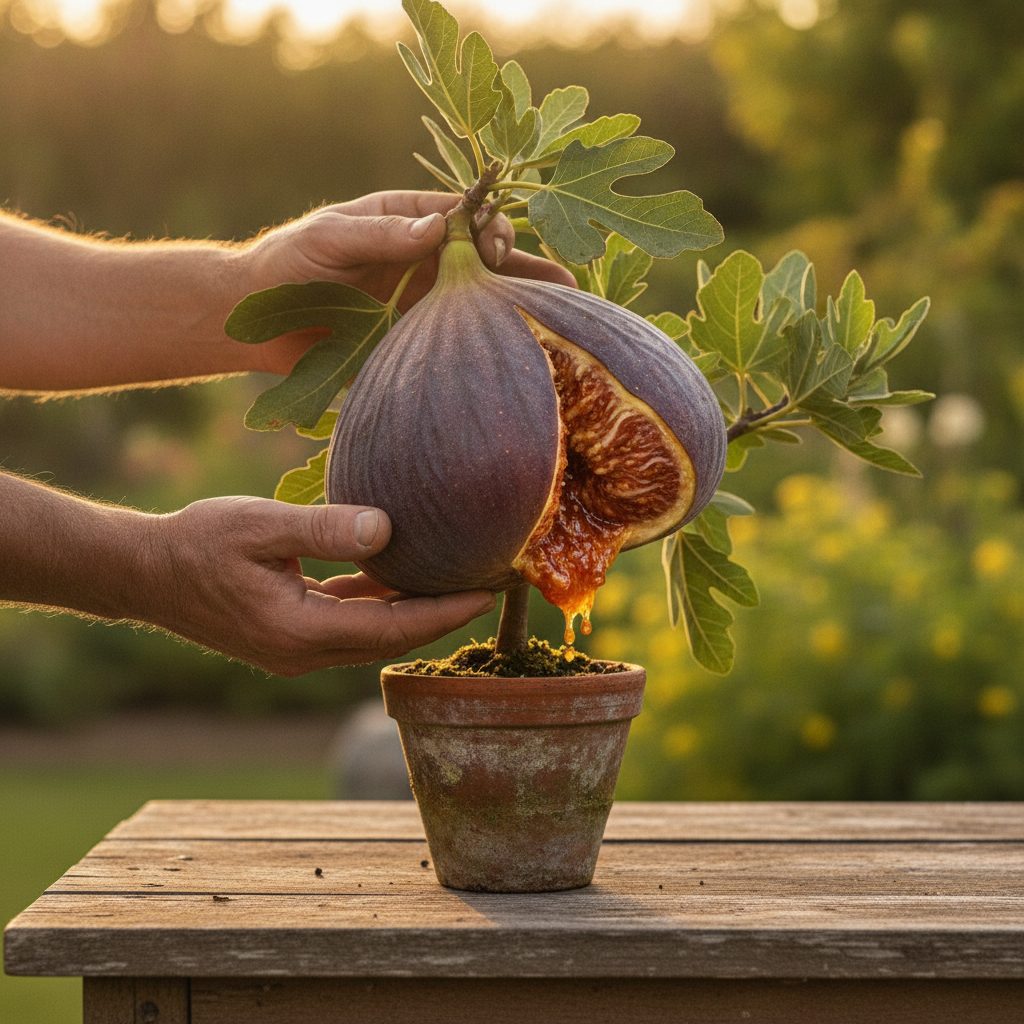
The Magic of the Brown Turkey
You want to grow big, juicy figs, but you’re looking at your small patio or balcony and thinking, “Figgy, I don’t have an orchard; I have a postage stamp.” Listen, I hear you. Most people think you need a rolling estate and a dedicated staff of horticultural monks to grow a decent fig tree. They’re wrong. You can grow a tree that looks like it belongs in the Garden of Eden right inside a five-gallon bucket. Specifically, we’re talking about the Brown Turkey. This variety has what I like to call “Big Brown Turkey Energy.” It’s resilient, it’s productive, and it’s remarkably forgiving when you realize you haven’t checked the soil moisture since the last solar eclipse.
The Brown Turkey is the quintessential “entry-level” fig that somehow remains a favorite for the seasoned pros. It produces a rich, mahogany-colored fruit with a sweet, amber interior that tastes like sunshine and nostalgia. In this guide, I’m going to show you how to take a simple Brown Turkey cutting and turn it into a fruit-bearing machine that fits comfortably next to your bistro set. We’re going to talk about root management, the secret to watering without creating a mosquito sanctuary, and how to prune for maximum fruit production instead of just growing a very tall stick.
Why the Brown Turkey Loves Tiny Houses
Not every fig variety is suited for life in a container. Some varieties have “wanderlust” and want to send their roots halfway to the neighbor’s yard just to find a snack. The Brown Turkey, however, is a team player. It adapts beautifully to the root restriction that comes with pot culture. In fact, many fig enthusiasts—myself included—find that slightly stressing the roots in a container actually encourages the tree to stop focusing on making leaves and start focusing on making breakfast (also known as figs).
When you grow a Brown Turkey in a container, you’re in control of the environment. You control the soil quality, the drainage, and most importantly, the location. If a freak frost threatens your harvest, you don’t have to build a plastic tent in the middle of the night like a madman; you just pick up the pot and move it into the garage. It’s gardening with an “undo” button, and for a guy who has accidentally frozen more tropical plants than I care to admit, that’s a beautiful thing.
Starting from Scratch: The Cutting Phase
Most of my favorite trees started as a stick in a cup. If you’re starting with a Brown Turkey cutting, you’re embarking on a journey of patience and mild obsession. To get that massive energy into a tiny container, you need a healthy foundation. When you get your hands on a cutting, you’re looking for a piece of dormant wood about six to eight inches long with at least three nodes. Those nodes are where the magic happens—roots come out the bottom ones, and leaves come out the top ones.
I recommend the “Baggy Method” or a simple potting mix setup. Place your cutting in a well-draining medium. Think of it like a spa day for your stick. It needs to be warm—around 70 to 75 degrees Fahrenheit—and the soil should be moist but not “abandoned shipwreck” wet. If you squeeze the soil and water runs down your arm, you’ve gone too far. We want damp, not drowned. Within a few weeks, you’ll see those white, fuzzy roots pushing against the sides of your starter cup. That’s the moment you realize you’re officially a fig parent. Congratulations. Your life is now about to be dominated by soil pH and sunlight angles.
The Container: Size Matters, But Shape Is Key
You might be tempted to put your tiny new cutting into a massive 20-gallon pot immediately. Resist that urge. It’s like buying an oversized suit for a toddler; they’re just going to get lost in it. Start with a one-gallon pot, then move to a three-gallon, and eventually settle into a five-to-ten-gallon “forever home.” Gradual up-potting prevents the soil from staying too wet, which can lead to root rot. Root rot is the silent killer of fig dreams, turning your vibrant tree into a sad, mushy memory.
When choosing your container, drainage is non-negotiable. If your pot doesn’t have holes, it’s not a pot; it’s a bucket, and buckets are for car washes, not figs. I’m a big fan of fabric pots (also known as grow bags). They allow for “air pruning,” which means when the roots hit the side of the bag, they stop growing and branch out instead of circling around the pot like a frustrated shark. This creates a dense, fibrous root system that can support a massive amount of fruit in a very small space.
Soil: Don’t Just Dig a Hole in the Yard
If you take dirt from your backyard and put it in a pot, you’re going to have a bad time. Garden soil is too heavy for containers; it compacts over time, squeezing the life out of your roots and refusing to let water pass through. You want a high-quality potting mix. Look for something with plenty of perlite or vermiculite—those little white rocks that look like Styrofoam. They provide the aeration your Brown Turkey needs to breathe.
I like to add a little bit of compost or worm castings for a slow-release nutrient boost, but don’t overdo it. Figs aren’t particularly “hungry” plants compared to something like a tomato, but they do appreciate a balanced meal. A mix that retains some moisture but allows excess water to exit quickly is the sweet spot. Think of it like a well-wrung sponge. That’s the environment where Big Brown Turkey Energy thrives.
Sunlight: The Engine Room
You can do everything else perfectly, but if you put your Brown Turkey in the dark, it will just sit there and judge you. Figs are solar-powered. To get those big, honey-sweet fruits, your tree needs at least six to eight hours of direct sunlight every day. If you’re growing on a balcony, make sure it’s not shaded by the building for most of the day. If you see your tree stretching out, getting “leggy” and thin, it’s screaming for more light.
In extremely hot climates, like the depths of a Texas summer, you might actually need to provide a little afternoon shade. While the tree loves sun, the pot can get incredibly hot, essentially cooking the roots inside. If you notice your leaves drooping every afternoon even though the soil is wet, your pot might be overheating. Try wrapping the pot in a light-colored material or placing it inside a larger, decorative pot to provide an air buffer.
Watering Without the Drama
Watering a container-grown fig is an art form. In the heat of summer, a Brown Turkey in a five-gallon pot is thirsty. It’s “just finished a marathon in the Sahara” thirsty. You might find yourself watering every single day. The key is consistency. If you let the soil dry out completely until the leaves wilt, and then you drench it, the fruit can split. A split fig is still edible, but it’s an invitation for every ant in the county to come over for a party.
Stick your finger into the soil. If it feels dry an inch down, give it a drink. If it’s still moist, walk away. Over-watering is just as dangerous as under-watering. If the roots sit in water, they can’t take in oxygen, and the whole system shuts down. I’ve seen more figs killed by “kindness” (over-watering) than by neglect. Be a parent, not a helicopter parent.
Feeding for Fruit, Not Just Foliage
When it comes to fertilizer, less is often more. If you give a Brown Turkey too much nitrogen, you will get a beautiful, lush, green tree that is twelve feet tall and has exactly zero figs. Nitrogen tells the plant to grow leaves. We want the plant to grow fruit. I prefer a balanced, slow-release organic fertilizer applied in early spring as the tree wakes up. A 5-5-5 or a 10-10-10 ratio works wonders.
As the season progresses and you start seeing those tiny little “embryo” figs (called syconia) appearing at the leaf nodes, you can switch to a fertilizer with a bit more potassium. This helps with fruit development and sugar production. Stop fertilizing by late summer. You don’t want to encourage a bunch of new, tender growth right before the winter sets in, as that new growth will be the first thing to die when the temperature drops.
The Art of the Tiny Orchard: Pruning
To keep a Brown Turkey “massive” in terms of production but “tiny” in terms of footprint, you have to be brave with the pruners. Don’t worry; you aren’t hurting the tree. You’re giving it a haircut and a pep talk. In late winter, while the tree is dormant and looks like a collection of grey sticks, take a look at the structure. You want to remove any branches that are growing inward toward the center of the tree. We want an open “vase” shape that allows light and air to reach every part of the plant.
If a branch is getting too long for your space, snip it back. This will encourage the tree to branch out lower down, keeping the fruit within easy reach. I always tell people: you are the boss of the tree. The tree doesn’t decide how big it gets; you do. Also, keep those pruners sharp and clean. Ragged cuts are an invitation for disease, and we want our Brown Turkey to be a champion, not a patient.
Common Mistakes and How to Fix Them
I have made every mistake in the book. I once left a container fig on a concrete patio in 105-degree heat without water for three days. It looked like a potato chip when I found it. But guess what? Brown Turkeys are tough. I soaked it, moved it to the shade, and it bounced back. If you mess up, don’t panic. Plants want to live.
- Yellowing Leaves: Usually a sign of over-watering or a nutrient deficiency. Check the moisture first. If it’s not soggy, it might need a light dose of fertilizer with some micronutrients like magnesium.
- Fruit Dropping: This is heartbreaking. You see the figs, you’re ready to eat them, and then they just fall off. This is often caused by extreme fluctuations in moisture or a sudden temperature swing. Keep that watering consistent!
- No Fruit: Usually not enough sun. If your tree is three years old and hasn’t given you a single fig, move it to the sunniest spot you have. If it’s still being stubborn, try root pruning or slightly restricting the fertilizer.
Winter Care for Your Potted Prodigy
If you live in a place where the ground freezes, your container fig needs a plan. Because the roots are above ground, they aren’t insulated like they would be in the earth. Once the tree drops its leaves and goes dormant, move it to an unheated garage, a basement, or a shed. It doesn’t need light during this time because it’s “sleeping.” It just needs to stay above about 20 degrees Fahrenheit.
Check the soil once a month during the winter. It should be barely moist—just enough so the roots don’t turn into dust. When the buds start to swell in the spring, bring it back out into the sun. Watching a Brown Turkey wake up after a long winter is one of the great joys of gardening. It’s a reminder that no matter how cold it got, the harvest is coming back.
The Reward: Harvesting the Big Brown Energy
You’ll know a Brown Turkey is ready when it “droops.” The neck of the fig will soften, and the fruit will hang down. It might develop some “sugar cracks” on the skin—those are the marks of a pro. A fig picked too early will be bland and milky. A fig picked at its peak is a revelation. It should feel like a soft balloon filled with jam. This is why we do the work. This is why we obsess over soil and pots.
Growing massive figs in tiny containers isn’t about having a “green thumb”—it’s about paying attention. It’s about understanding what the plant needs and providing it in a controlled way. The Brown Turkey is the perfect partner for this experiment. It’s sturdy, it’s prolific, and it has more personality than most of my relatives. So, grab a cutting, find a pot, and let’s grow something amazing.
Ready to start your own tiny orchard? Whether you’re looking for high-quality Brown Turkey cuttings or the tools to help them thrive, we’ve got everything you need to start your fig journey. Don’t let a lack of space stop you from growing the best fruit you’ve ever tasted. It’s time to find out just how much energy you can pack into a five-gallon pot.