


Water vs Soil: Which Roots Fig Cuttings Faster?
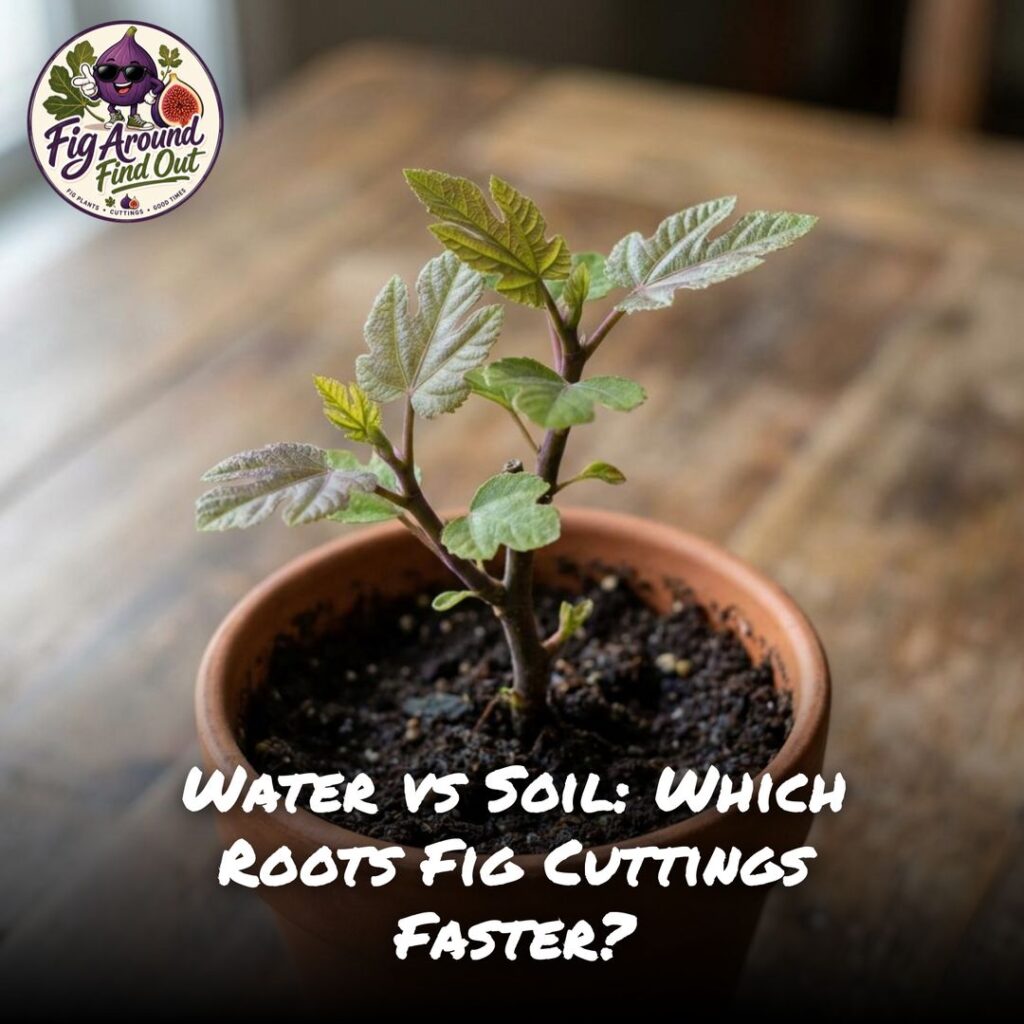
Water vs Soil: Which Roots Fig Cuttings Faster?
So you’re standing there, staring at your beloved fig cutting and wondering what’s next. You’re thinking, “To water or not to water, that is the question!” Well, lucky for you, you’ve stumbled upon Figgy Smalls—speaker of plant truths, conqueror of root systems, and master of fig tree shenanigans. We’re about to dive into the grand debate of water versus soil for rooting fig cuttings! Ready to join me on this epic journey?
First things first, I remember my newbie days, staring blankly at cuttings, hoping they’d magically sprout roots. Whether you fancy a lush fig plant rocking a dance party under your patio lights, or you’re plotting world domination via fig tree army, you’ve gotta start somewhere—cuttings!
Let’s get those botanical gears turning and figure out if water or soil deserves the title of Ultimate Rooting Champion.
Water: The Fluid Frontier
Imagine this: Your cutting takes a dip in water like it’s lounging in the world’s tiniest pool. In this wet wonderland, your soon-to-be plant gets to experience a thirst-free luxury holiday while checking its progress right before your eyes!
Pros of Water Rooting
- Visual Stimulation: Watching roots grow is like watching the most gripping reality TV ever. You can keep an eye on every twist and turn!
- Weekly Check-Ins: At any moment, you can peek at the roots sprouting, like live updates in your fig rooting saga.
- No Risk of Drying Out: Water provides a constant supply of moisture (duh, it’s water!), helping avoid the dreaded dry-out scenario.
Cons of Water Rooting
- Root Shock: Alas, transitioning from water to soil can give cuttings a mild identity crisis. They might go, “Wait, where’s my pool?!”
- Lack of Nutrients: While water baths are lovely, they lack the nutrient-rich spa treatment cuttings would get in soil.
- Root Rot Risk: If you’re not careful, water can spoil the party and lead to root rot. That’s a no-go in Figgy’s book.
Soil: The Grounded Guardian
Switching gears to soil—our stable, down-to-earth rooting companion. Picture your cutting, nestled in soil, building its roots securely and secretly, plotting a slow but strong takeover of your garden.
Pros of Soil Rooting
- Root-to-Ground Comfort: With soil comes natural nutrients and minerals. It’s like a balanced breakfast for your cutting!
- Strong Roots: While it takes a tad longer, the roots in soil grow sturdier as they navigate through obstacles.
- No Transplant Drama: Skip the transitional angst by starting in the spot they’ll grow large and in charge.
Cons of Soil Rooting
- Waiting Game: Unlike water, you can’t see the roots popping out, which can feel as suspenseful as waiting for the next plot twist in your favorite show.
- Overwatering Danger: The roots want to drink, not swim—too much water makes them rather upset!
- Higher Maintenance: Keeping soil evenly moist is no walk in the park. You’ve got to stay on your A-game!
How to Root Fig Cuttings in Water
- Fill a clear glass or jar with water—no swimming pools needed!
- Place your fig cutting in the water. Ensure those nodes, a.k.a. those ever-curious root-growing spots, are submerged.
- Set your future tree near bright, indirect light. Not in direct sunlight, though. We’re sprouting roots here, not making sun tea!
- Change the water every few days to keep it fresh. Your cutting wants that gourmet hydration treatment!
- Watch roots appear! It’s cuteness overload watching them start to squiggle out.
How to Root Fig Cuttings in Soil
- Fill a pot with a mix that drains well. Think of it as upscale fig real estate!
- Place your cutting about two inches deep in the soil. Let those roots anchor in.
- Water to wet, but don’t drown the soil. Remember—I support your poor horticultural decisions, but root rot isn’t one of them!
- Cover with a plastic bag to create a mini greenhouse. Fig fiesta, anyone?
- Check moisture levels periodically. Keep it steady and you’ll be rewarded!
Which Method Roots Faster?
The moment of truth—you want to know the speedy champ between water and soil? If it’s speed you’re after, water often wins the race. But think of it like a track star who still needs to make a jump to another league. Once the roots are visible, the cutting eventually needs a transition to soil to live its best tree life.
The sneaky secret? Combining both. Allow the roots to develop in water, then transfer to soil for becoming a long-term resident. Grounded, strong, and ready to produce figs to fill a whole pantry!
Final Tips on Rooting Fig Cuttings
Comrades in fig goodness, remember that rooting is all about patience—and a little bit of humor. And hey, if you fail once or twice, welcome to the garden club. We’ve all been there!
If you find yourself staring at a wilting leaf and thinking, “Oops, that didn’t go as planned,” just say, “Ask me how I know!” Everyone’s sprouted something questionable at some point.
There’s a confident fig grower hiding in all of us—eager to transform yards with endless fig trees. It’s about fun, a touch of chaos, and a whole lotta learning.
So grab a cutting, water or soil it up, and let’s make some questionable horticultural decisions together. Trust me. I’m professionally questionable!
Shop Our Best Sellers
-

Rooting Hard or Hardly Rooting
$49.00 Select options This product has multiple variants. The options may be chosen on the product page -
Nice Figs
$49.00 Select options This product has multiple variants. The options may be chosen on the product page -
Show Me Your Cuttings
$49.00 Select options This product has multiple variants. The options may be chosen on the product page -
I Like Big Figs
$49.00 Select options This product has multiple variants. The options may be chosen on the product page -
Brown Turkey Fig Cutting
$10.00 Add to cart